Exhibitions / Group
Conflict
20-21 Visual Arts Centre, Scunthorpe
10 February – 9 June 2007
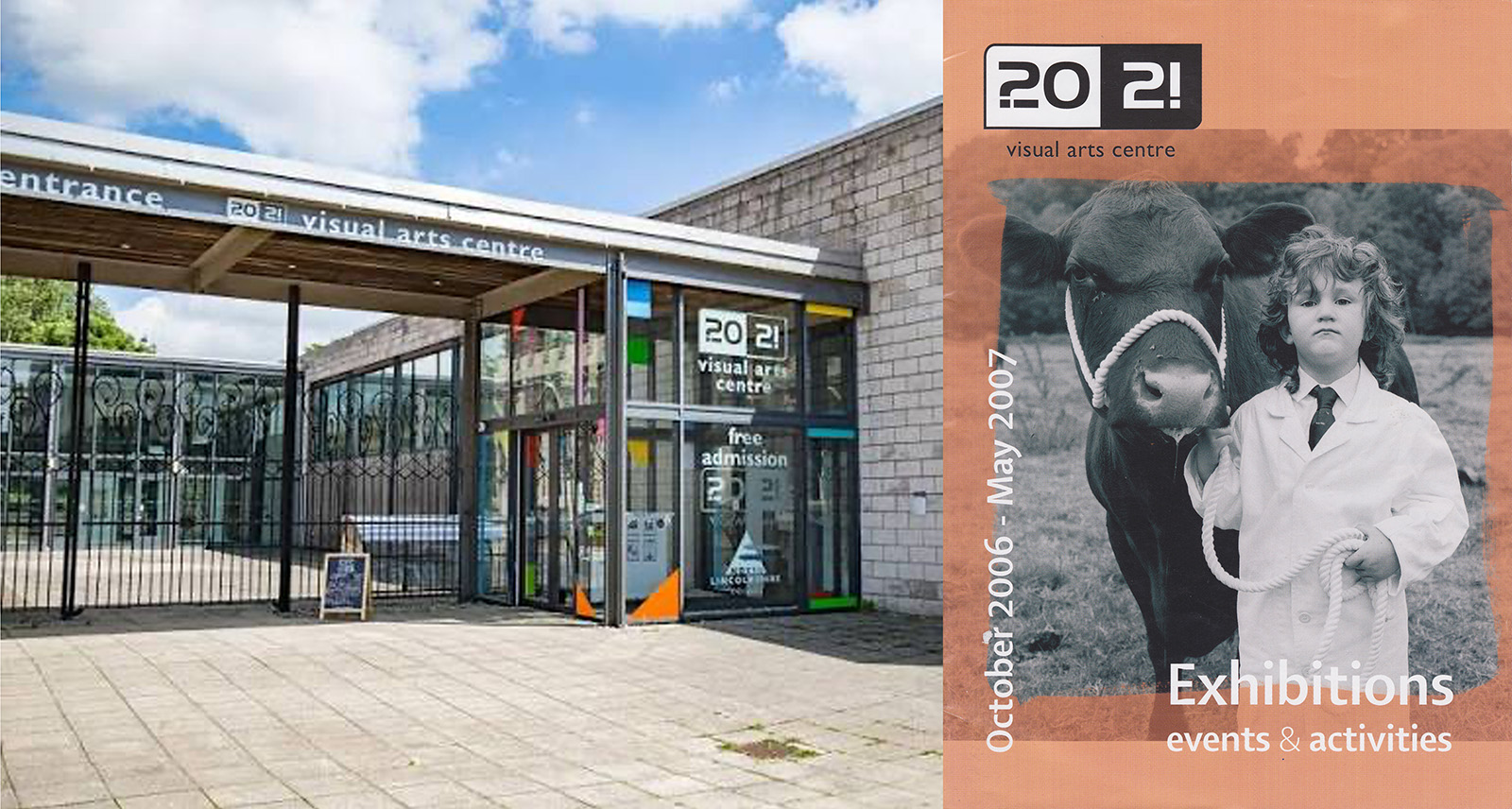
Conflict brought together seventeen contemporary artists making work in response to war, political instability and world events. Curated by Dominic Mason, the exhibition examined how events experienced at a geographical distance are encountered through television, newspapers, photography and other forms of mediated information.
The exhibition guide described a Western public continually exposed to images of war and terror while remaining physically removed from the upheaval, insecurity and violence experienced by those directly affected. The works in Conflict approached this distance from a range of positions, considering political power, military action, terrorism, nationalism, propaganda, masculinity, historical memory and the representation of violence.
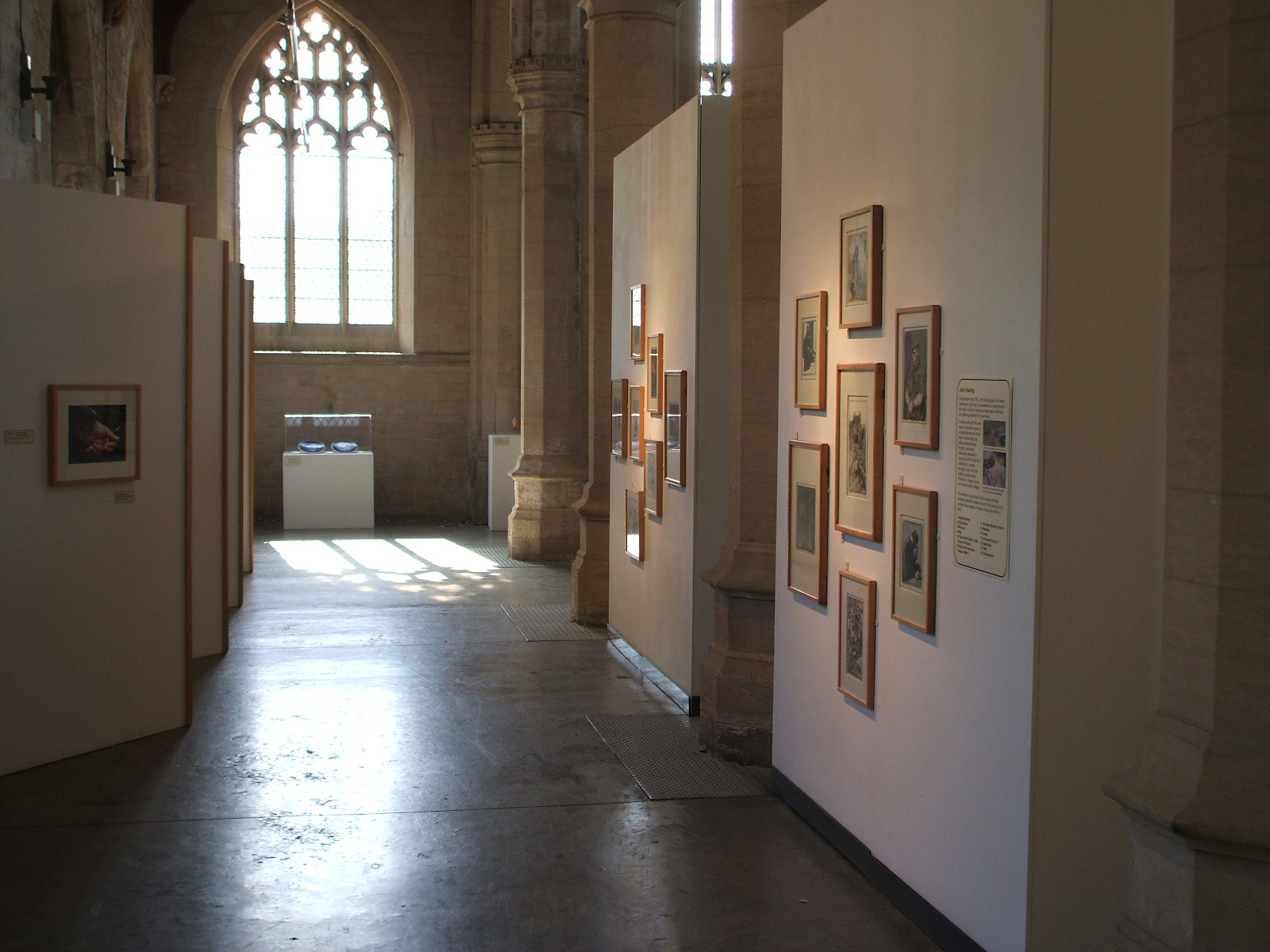
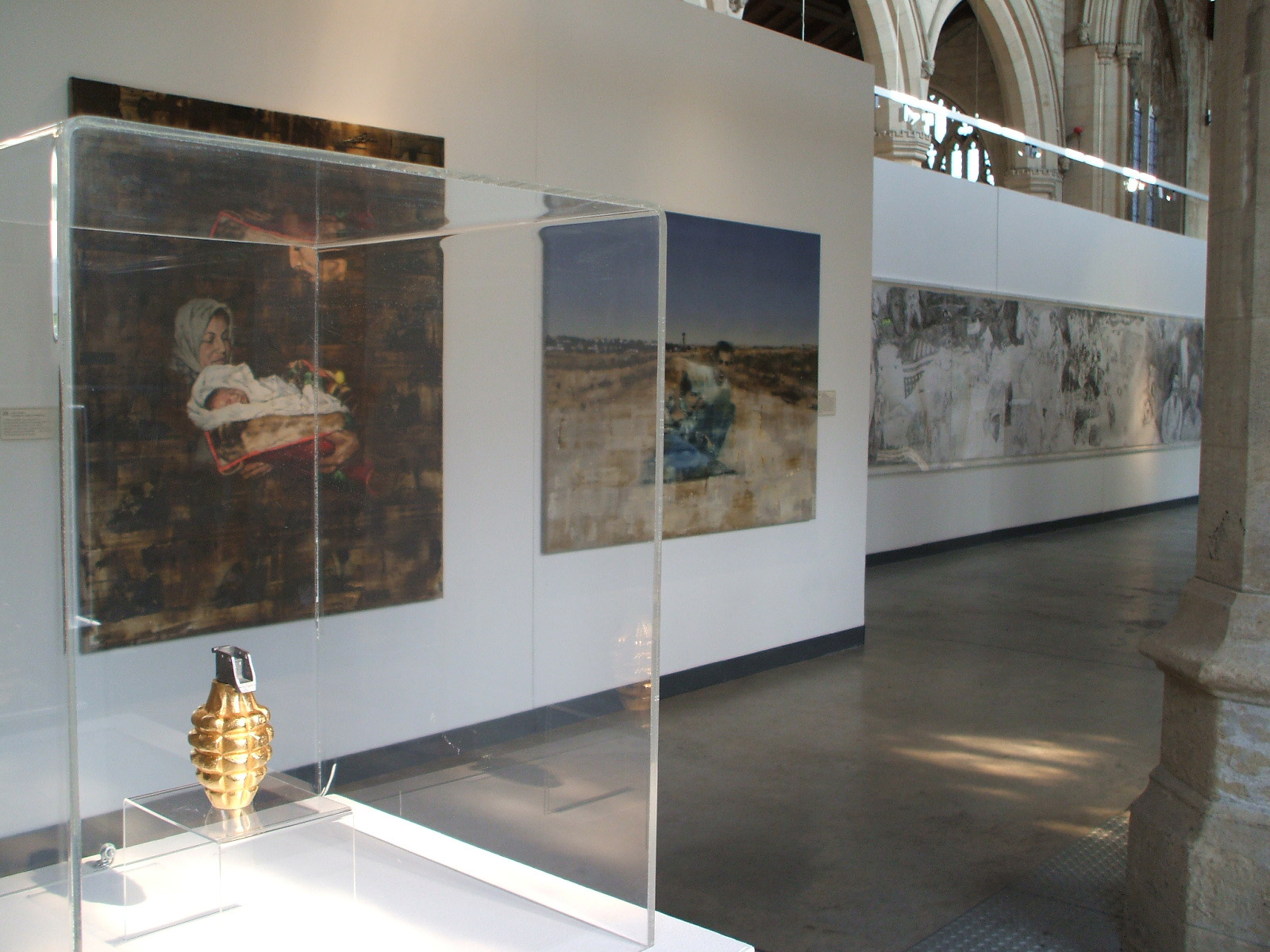
The exhibition included painting, drawing, photography, sculpture, ceramics, video, installation and artist-designed objects. Its subjects extended from Kosovo, Afghanistan and Iraq to Palestine and Israel, Guantánamo Bay, Northern Ireland, the Holocaust and the political consequences of the global war on terror.
Exhibition Context
Presented in 2007, Conflict was shaped by the political conditions of the period following the attacks of 11 September 2001 and the subsequent wars in Afghanistan and Iraq. News reporting had made distant military operations part of everyday visual culture, but the scale, speed and repetition of these images could also create a sense of detachment.
Rather than offering a single political argument, the exhibition brought together different forms of observation, testimony, symbolism and critique. Some artists responded directly to places affected by war, while others examined the language, images, objects and systems through which conflict was understood.
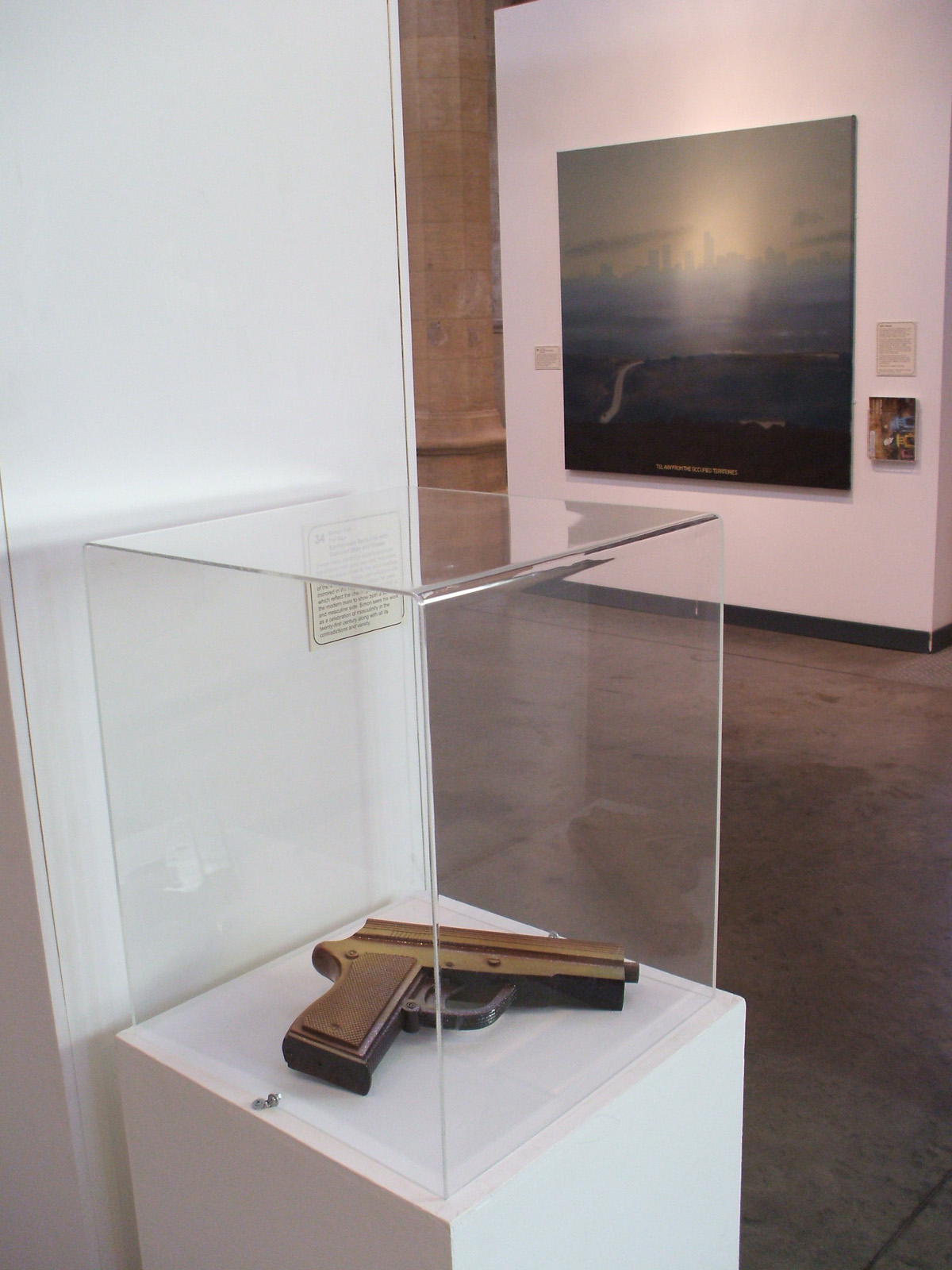
John Dowling presented paintings developed from material gathered while travelling through Kosovo in 2000. John Keane exhibited works relating to Palestine and Israel, while Mario Minichiello’s twenty-eight-foot drawing attempted to contain events and information from the war in Afghanistan within a single continuous image.
Other works considered military recruitment, the relationship between Britain and the United States, anti-terror legislation, detention without trial, the occupation of Iraq and the role of television news in creating and reinforcing public anxiety.
Curated by Dominic Mason.
Richard Bartle’s Contribution
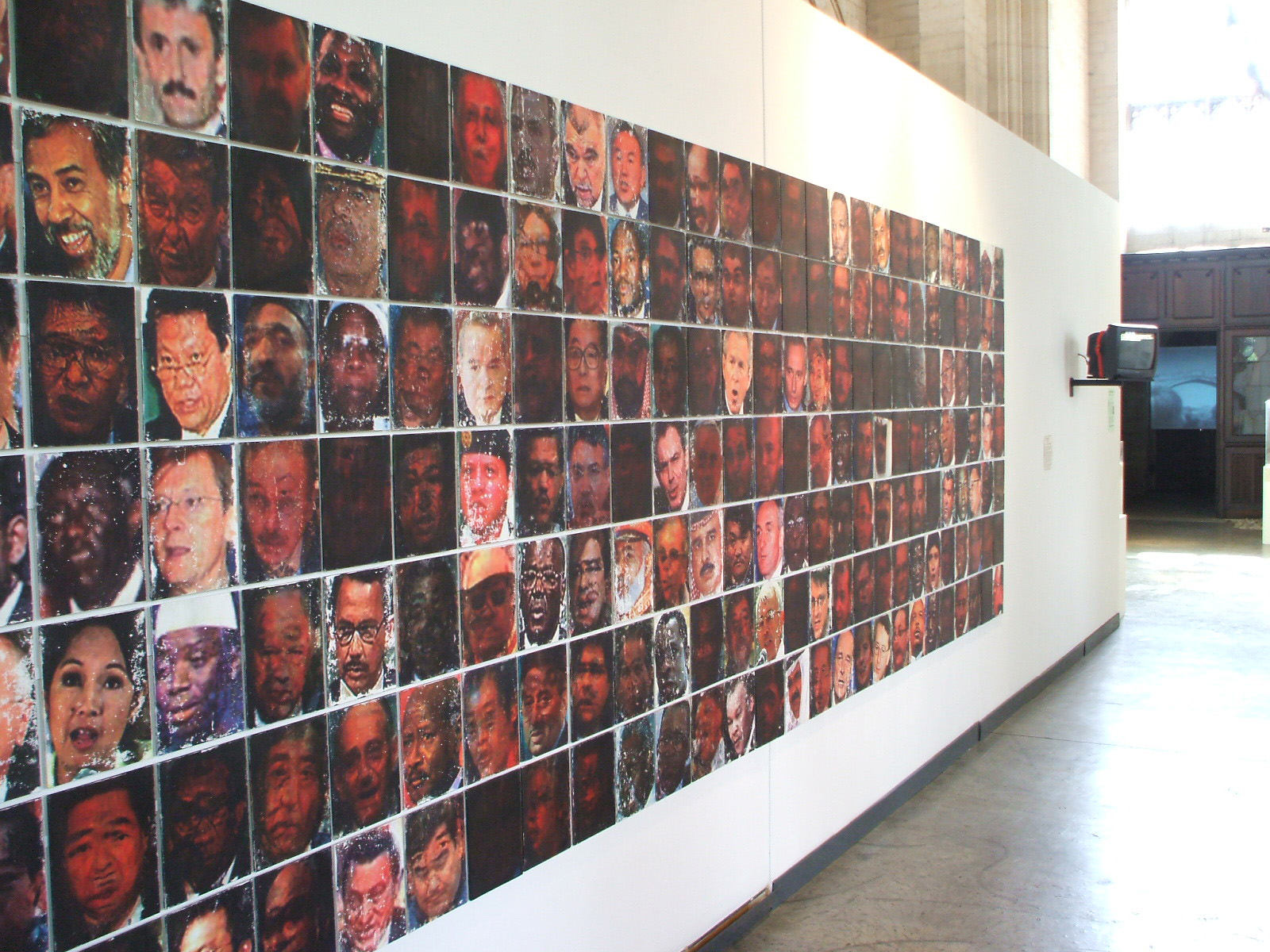
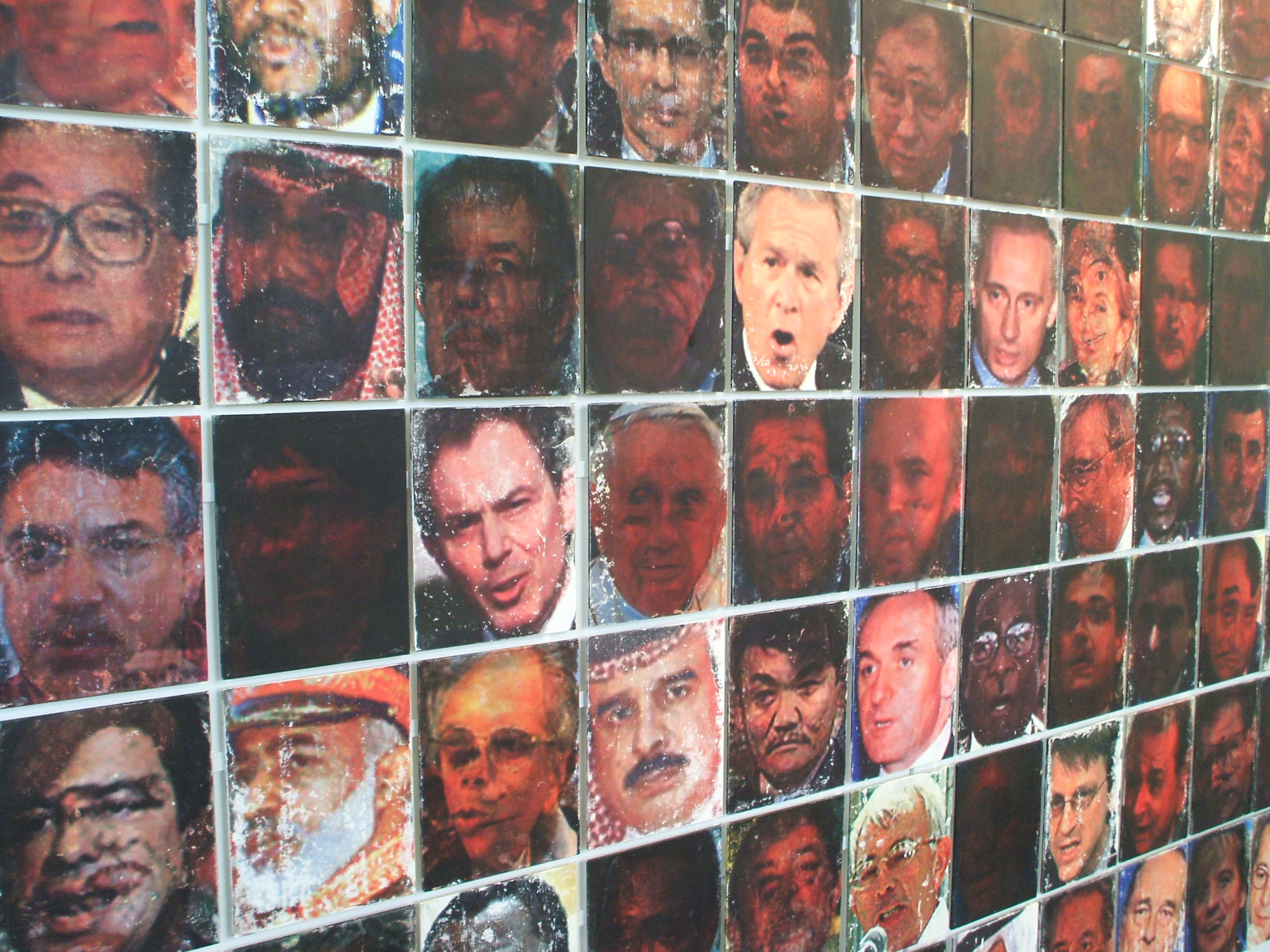
For Conflict, Richard Bartle exhibited Pow-Wow, a large-scale installation consisting of 196 individual canvas panels representing the world’s heads of state.
The project began in 2001, when George W. Bush became President of the United States. Bartle assembled a portrait of each serving national leader and transferred the images onto separate canvas panels. Whenever a leader was replaced, the portrait of the successor was transferred directly over the image of the person who had preceded them.
As these changes accumulated, the panels became records of political succession. Some remained comparatively clear, while others grew dark, fractured and densely layered. Earlier leaders were not removed but gradually buried beneath the faces of those who followed them.
The physical transfer process was integral to the work. Toner images applied using acrylic gel lost fragments as the paper was removed, while white areas disappeared into the ground of the canvas. Repeated transfers created unstable, ghost-like portraits in which individual identities became difficult to separate.
The resulting surfaces resisted a simple distinction between democratic stability and political disorder. A clearly visible face might represent either a dictator who had retained office for many years or a democratically elected leader repeatedly returned to power. Equally, a densely layered panel might record violent upheaval or the regular and peaceful transfer of government.
The title imagined a gathering or council in which every national leader might be brought together in one place. While the work documented the reality of political change, it also contained a more speculative and utopian desire for communication, accountability and reconciliation.
Installation Views
Selected Artwork
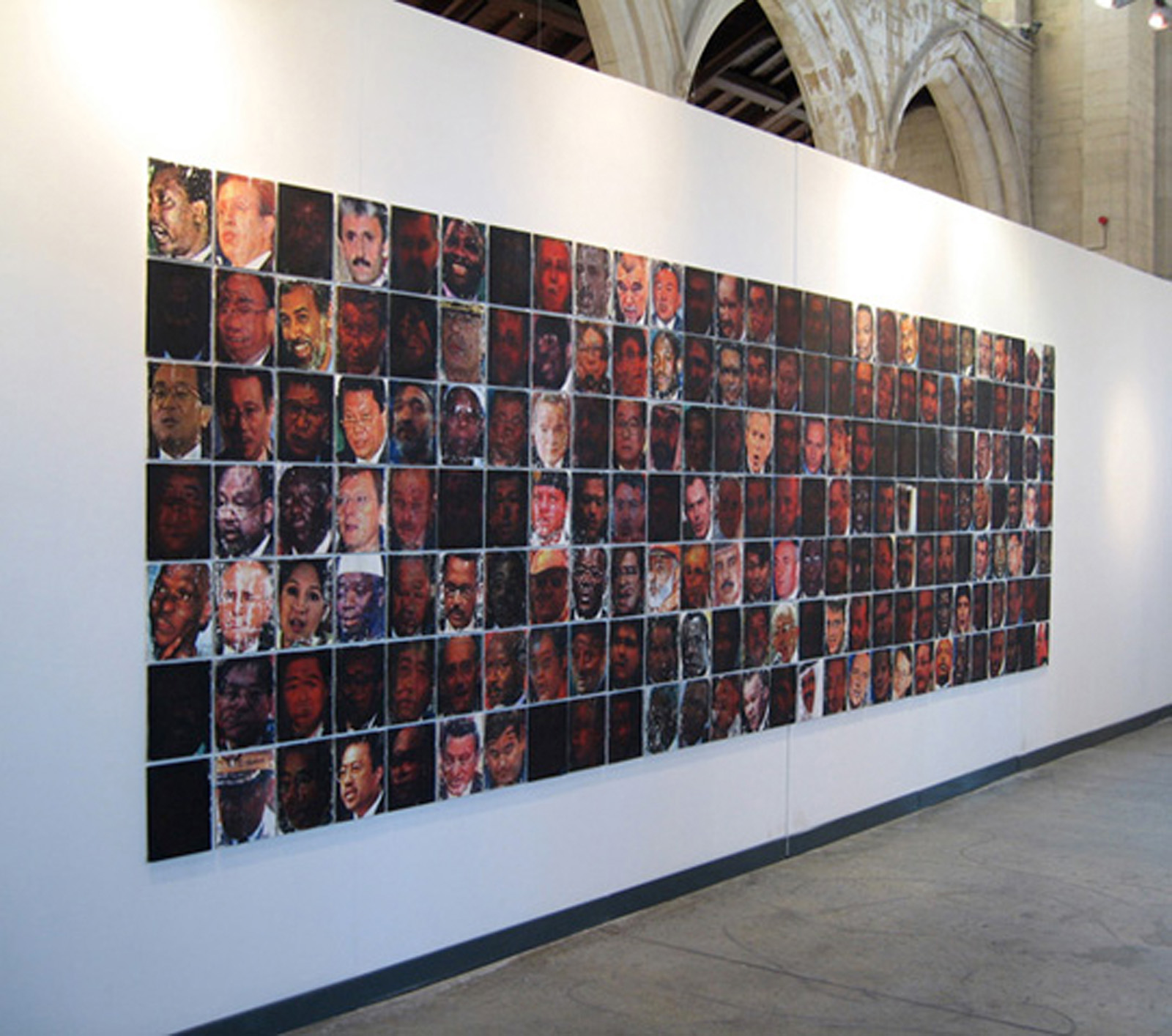
Pow-Wow
2007 · mixed media on canvas panels
Installation at Conflict, 20-21 Visual Arts Centre, Scunthorpe
View the complete Pow-Wow project →
Contemporary Reception
The exhibition was previewed in the regional press shortly before it opened. The article introduced Conflict as a demanding and thought-provoking exhibition for audiences interested in engaging with contemporary world events.
The preview placed particular emphasis on Pow-Wow, describing Bartle’s presentation of 196 international heads of state and inviting readers to consider ideas of responsibility and accountability within the work.
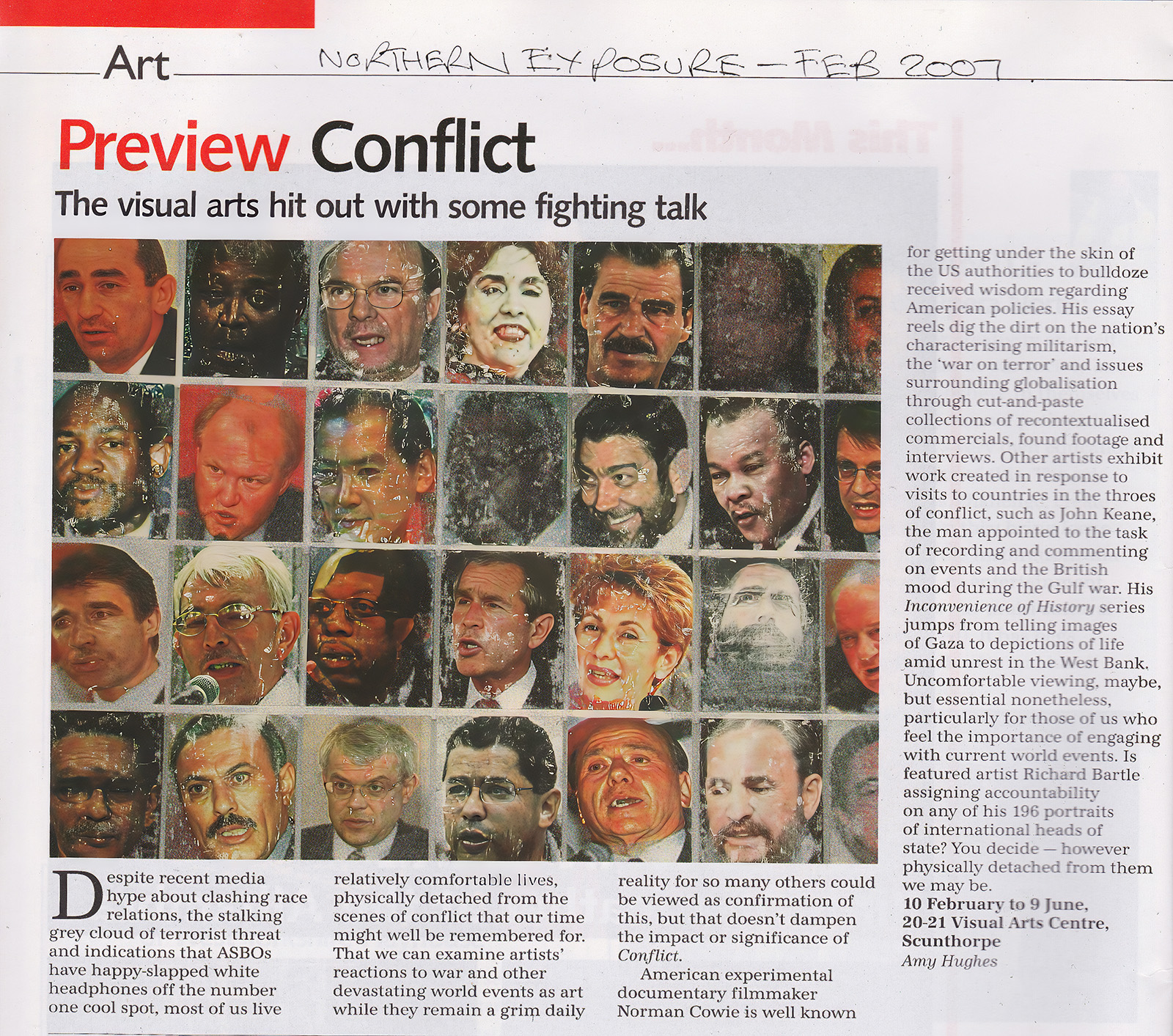
Contemporary newspaper preview of Conflict, 2007
Emma Cocker wrote an extended critical response to Pow-Wow for a-n in February 2007. She considered the work as both a record of changes within global politics and an imagined attempt to gather political leaders together in the hope of discussion and reconciliation.
Cocker described the work as existing between political reality and utopian desire. Her essay examined the burial of earlier portraits beneath later images, the instability of political authority and the difficulty of establishing responsibility within a constantly changing field of power.
Read Emma Cocker’s review of Pow-Wow on a-n →
Participating Artists
Richard Bartle
Tony Bennett
Nick Crowe
Norman Cowie
Rowan Dejardin
John Dowling
Simon Fell
Christian Glaeser
Chris Holden
Ianworks — Ian Anderson
John Keane
Tony Kemplen
David Kirshner
Alastair Mackie
Mario Minichiello
Nigel D. Morpeth
Gautam Narang
Curated by Dominic Mason.
Legacy
Conflict marked an important stage in the development and public presentation of Pow-Wow. The work brought Bartle’s material process of layering and image transfer into direct relationship with political history, using the changing surfaces of the panels to register the passage of time and the continual transfer of power.
The exhibition also established a relationship between Bartle and 20-21 Visual Arts Centre. Bartle later returned to the gallery with the solo exhibition Deities at the Bottom of the Garden, accompanied by an introduction written by Dominic Mason.
Pow-Wow subsequently developed beyond the original installation. In 2009, a moving-image work made from the assembled portraits was commissioned for the Sheffield Pavilion, a parallel project presented during the 11th Istanbul Biennial. The project continued to be exhibited and screened internationally, extending its examination of political succession, instability and collective responsibility.
Image Credits
Installation photographs by Dominic Mason.