Unearthed
The Ricca's Haugh Series
The Ricca's Haugh Series is a new body of work emerging through fieldwalking, gathering and repeated visits to the landscape around Riccall, on the River Ouse south of York.
The name Riccall has deep roots in the landscape. Ricca's Haugh evokes an older understanding of the place: a piece of low-lying riverside land associated with a person whose name has survived long after almost everything else about them has disappeared. For this developing series, the name provides a way of thinking about place before the modern boundaries of county and parish, and about the persistence of human presence within the land.
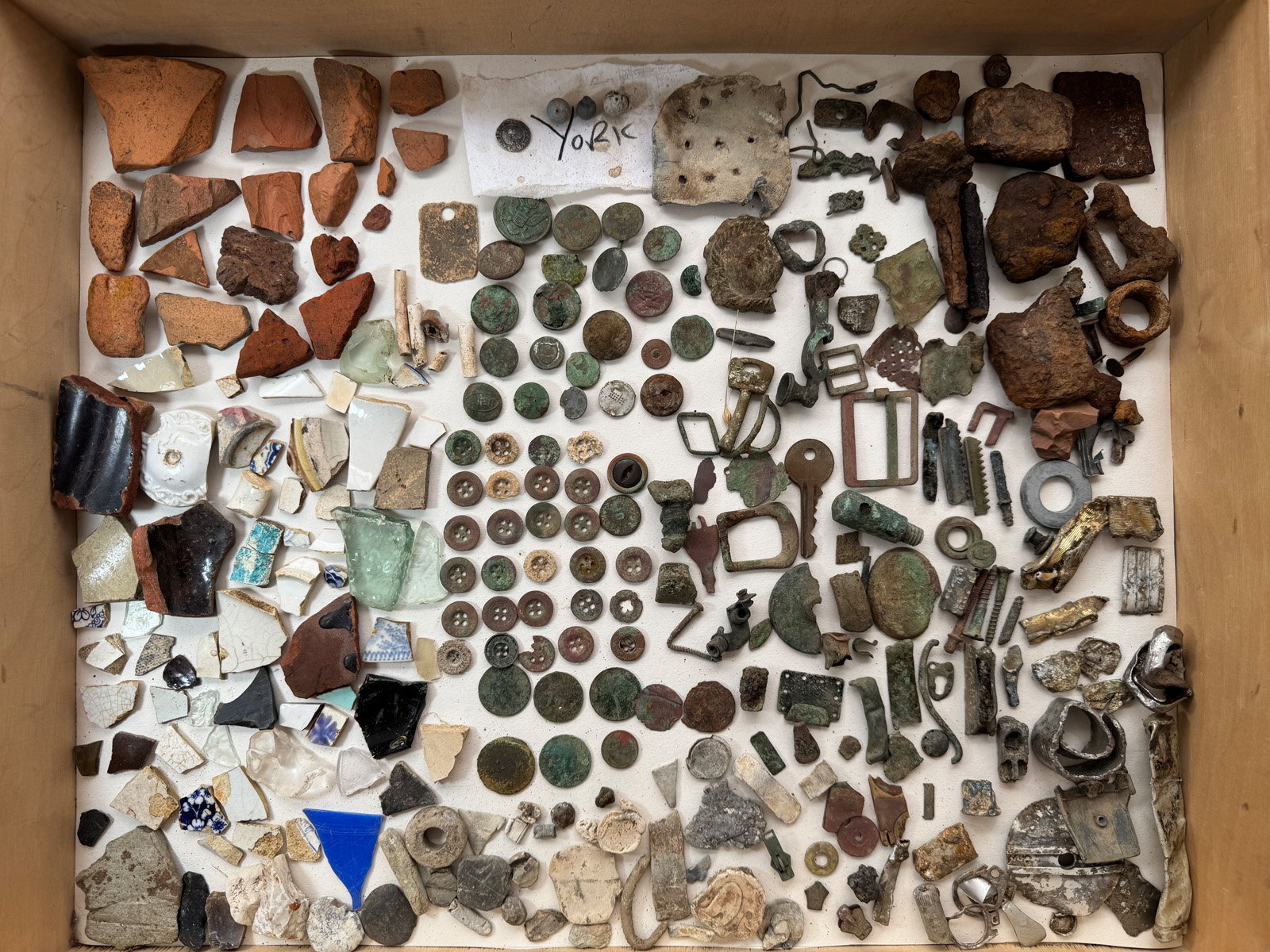
The Finds
Objects and material gathered through fieldwalking and metal detecting around Riccall, 2026
The Historic Environment
Riccall occupies a low-lying agricultural landscape beside the River Ouse, within the Vale of York. Water, cultivation and movement have shaped this ground over long periods, and its position on the river has repeatedly connected the immediate landscape to much wider histories.
Perhaps the best-known of these occurred in 1066. Harald Hardrada, King of Norway, and Tostig Godwinson sailed their fleet up the Humber and Ouse and landed at Riccall before advancing towards York. Following their victory over the English forces at Fulford, Hardrada returned to the fleet at Riccall before travelling to Stamford Bridge, where his army was defeated by Harold Godwinson on 25 September. For a brief moment, this quiet riverside landscape became the base for one of the last great Scandinavian invasions of England.
That event, however, represents only one moment within a much longer history. The landscape around Riccall contains evidence of earlier occupation as well as medieval and later agricultural life. The manor of Riccall was held by the Archbishopric of York before the Domesday Survey, and the surviving remains of a medieval prebendary manor provide another indication of the long relationship between land, authority, settlement and cultivation in the area.
A New Field of Work
My engagement with Riccall is only beginning. As with the earlier work developed around Wood Enderby, the process starts not with a predetermined historical narrative but with walking the land and paying attention to what emerges from it.
Objects and fragments recovered through fieldwalking and metal detecting are being cleaned, recorded and considered before becoming the starting points for new paintings. Some are immediately recognisable; others remain uncertain. Stone, metal, pottery and the accumulated debris of different periods arrive together, removed from any neat chronological sequence by centuries of cultivation and movement through the soil.
The Ricca's Haugh Series will develop from these encounters. The paintings will emerge gradually from the material record of the place and from the relationship formed through returning to the same ground: looking, gathering, handling and learning.
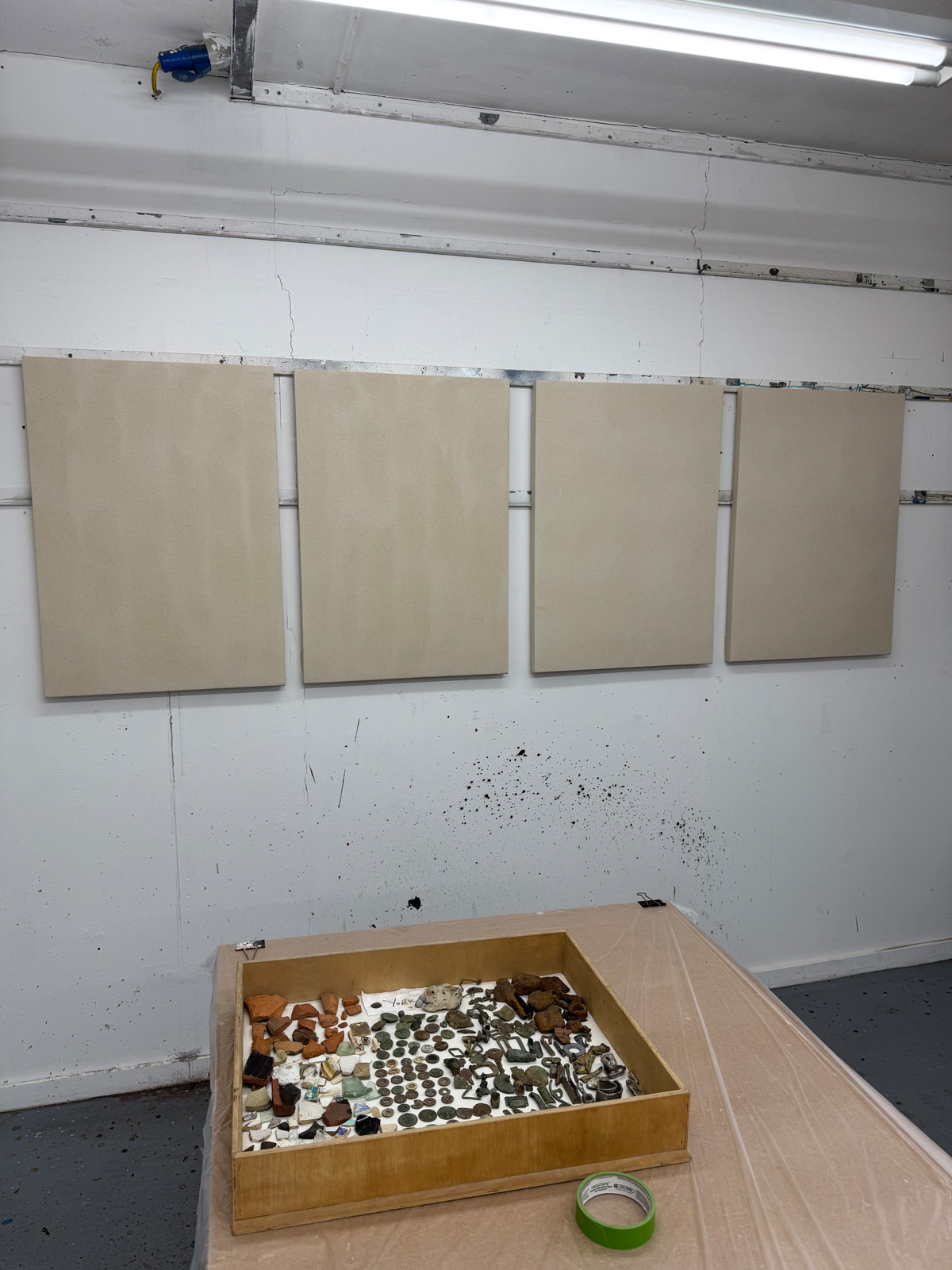
The Work Begins
Canvases prepared for the first paintings in the Ricca's Haugh Series, 2026
New work coming soon.